
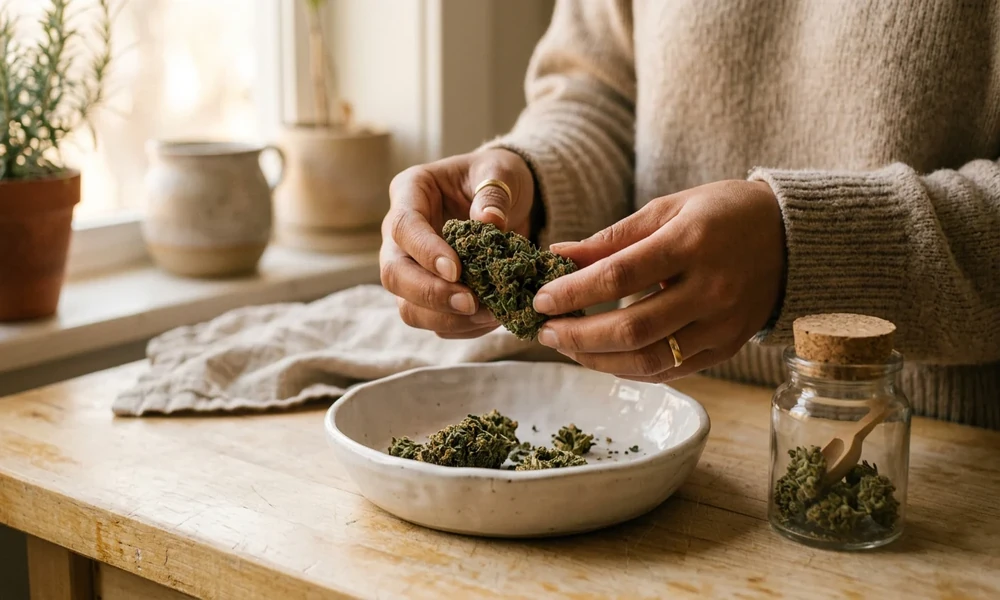
Why colour variation occurs?
Walk through any selection of THCA flower and colour differences are immediate. Some batches run deep purple. Others hold rich green. Pistils range from cream through vivid orange into red. None of that is accidental. thca flower takes on specific hues because of biological activity occurring at precise points in cultivation, and reading those hues starts with knowing what produced them rather than treating colour as a surface characteristic alone.
Genetics limits what a cultivar can express visually. Nutrients, light, and temperature either develop or inhibit that potential. A specific moment in that development is captured during harvest, and handling after cutting determines how much survives.
Genetic reasons for colour
Each cultivar carries its own pigment program. Anthocyanin-rich varieties hold potential for purple, blue, and burgundy colours that only surface when growing variables activate them. Chlorophyll-dominant genetics stay deep green through maturity regardless of environment. Pistil colouration runs on a separate track, moving through cream, yellow, and into orange and red as the plant matures, independent of bract surface development. Flavonoid differences between genetic lines add further visual complexity that persists across growths regardless of cultivation variables.
Temperature during cultivation
- Cool night temperatures in late flowering activate anthocyanin development that moves through bract surfaces, replacing dominant green with deeper hues.
- Hue intensity corresponds directly to how far temperatures dropped and for how long in the weeks before harvest.
- Sustained cool periods draw out fuller pigment development than brief drops that only partially trigger the same response.
- Warm late flowering environments keep green chlorophyll dominant at maturity regardless of genetic support.
- Pistil colouration deepens through its own maturation arc from white through cream, yellow, and into orange and red.
Light exposure during growing
UV light drives flavonoids and anthocyanins in plants as a natural response to radiation. UV-exposed plants develop richer pigmentation than their filtered or low-intensity counterparts. Full-spectrum light throughout the growth cycle masks underlying hues even in anthocyanin-rich genetics, while low light during flowering appears paler and less saturated at harvest.
Nutrient levels during growth
- Adequate nitrogen supports chlorophyll production, giving leaf and bract material a healthy green colouration throughout the growing season.
- Correct levels of phosphorus and potassium produce consistent colouration across the surface.
- Magnesium sufficiency prevents interveinal yellowing that results in uneven visual patterns that persist during curing.
- Prior to harvest, nutrient management keeps the plant focused on development.
Curing and post-harvest colour
Fresh cut material arrives green regardless of what pigmentation developed during flowering because chlorophyll dominates immediately after cutting. As curing progresses, that chlorophyll breaks down and reveals the underlying hues the plant built during cultivation. Purple becomes visible. Green deepens and saturates. Rushed curing at elevated temperatures disrupts that breakdown, leaving patchy colouration across the surface. Stable curing conditions allow even chlorophyll degradation, producing consistent colouration that reflects what genetics and growing conditions actually built.
Maturation stage at harvest
- In early harvest, chlorophyll dominates before pigments fully develop.
- A cultivar’s peak harvest captures the anthocyanin development and pistil colouration when they all align.
- Late harvest reveals amber and warm brown tones as chlorophyll degrades past the point where underlying hues compensate.
- Timing relative to each cultivar’s maturation arc determines which visual state carries into post-harvest handling.
Colour in the THCA flower reflects every stage of production working in sequence. Managing growing variables, harvest timing, and post-harvest handling all contribute to vivid, consistent colours at selection.